Western Sydney International's Slow Burn: Why Australia's New $4 Billion Curfew-Free Airport Is Struggling to Lure Global Airlines at Launch
Key Takeaways
A Quiet Opening Week: When Western Sydney International (Nancy-Bird Walton) Airport (WSI) opens for commercial passenger flights on October 25, 2026, following its July 27 cargo launch, only a tiny fraction of its 10-million-passenger terminal capacity will be utilized.
Thin Airline Lineup: At passenger launch on October 25–27, only Jetstar (domestic to Gold Coast, Melbourne, Brisbane) and Air New Zealand (3x weekly to Auckland) will operate, with Singapore Airlines arriving November 23, 2026, and QantasLink, VietJet Air, and Fiji Airways waiting until early 2027.
The Missing Metro Link Penalty: Opening without the delayed Sydney Metro – Western Sydney Airport rail line forces passengers onto 30-minute shuttle buses to St Marys station or an hour-long A$55 one-way express shuttle to central Sydney, chilling corporate and eastern-suburbs demand.
Split-Hub Network Friction: Full-service global carriers are reluctant to split frequencies or abandon Sydney Kingsford Smith (SYD) because WSI lacks interline domestic feed—highlighted by the inability to book single-ticket connecting itineraries between Singapore Airlines and Qantas/Jetstar.
After 15 Years and A$5.6 Billion, Where Are the Planes?
On Sunday, October 25, 2026, at 11:00 a.m. local time, Jetstar Flight JQ362—an Airbus A320 bound for the Gold Coast—will lift off from the 3,700-meter runway at Badgerys Creek, officially inaugurating passenger service at Western Sydney International (Nancy-Bird Walton) Airport (WSI). The moment represents the culmination of more than half a century of political debate, 15 years of planning since Prime Minister Anthony Albanese commissioned the 2011 joint study, and A$5.6 billion (roughly $4 billion USD) in core airport construction backed by nearly A$19 billion in broader regional infrastructure investment.
Yet beneath the ribbon-cutting fanfare, aviation analysts and airline network planners are confronting an uncomfortable reality: Sydney's gleaming, curfew-free second gateway is opening to the sound of echoes. Built with an initial terminal capacity of 10 million annual passengers—and master-planned to scale to 20–30 million and eventually 82 million passengers—WSI is commencing passenger operations with just a handful of daily flights, virtually no mainline full-service domestic presence until March 2027, and only four confirmed international passenger carriers across its entire first six months of operation.
"Airlines need time to assess demand; carriers will only expand when they see hard evidence that passengers will use the airport consistently and that routes can operate profitably. For local residents, the message is direct: it's use it or lose it." — Industry & Executive Assessment of WSI's October 2026 Launch
Why has a brand-new, technologically advanced, 24/7 international airport in Australia's largest metropolis struggled to lure global full-service carriers at launch? The answer is a textbook case study in greenfield airport economics, surface transport mistiming, and the unforgiving physics of airline hub-and-spoke networks.
The Launch Roster: Who Is Actually Flying from WSI?
Greenfield secondary airport adoption describes the commercial challenge faced by newly constructed metropolitan airports attempting to draw airlines away from a slot-constrained, centrally located incumbent hub. In Sydney, incumbent Kingsford Smith Airport (SYD) at Mascot sits just 8 kilometers from the Central Business District (CBD), whereas WSI in Luddenham/Badgerys Creek lies roughly 44 kilometers west of the city center.
While WSI successfully launched cargo operations on July 27, 2026 (anchored by Qantas Freight, ASL Airlines, and National Jet Express) and will assume overnight freight movements when night operations formally transition on November 1, 2026, the passenger schedule rolling out between October 2026 and March 2027 is remarkably sparse:
Airline | Route(s) from WSI | Launch Date | Aircraft / Frequency & Strategic Notes |
Jetstar (JQ) | Gold Coast (OOL), Melbourne (MEL), Brisbane (BNE), Denpasar/Bali (DPS) | Oct 25, 2026 (OOL/MEL) Oct 27, 2026 (BNE) Mar 15, 2027 (DPS) | First passenger operator (JQ362 at 11am Oct 25). Using low-cost A320s with return MEL fares discounted to A187vsA258 at SYD. |
Air New Zealand (NZ) | Auckland (AKL) | Oct 26, 2026 | First international passenger carrier at WSI, operating a modest 3x weekly schedule. |
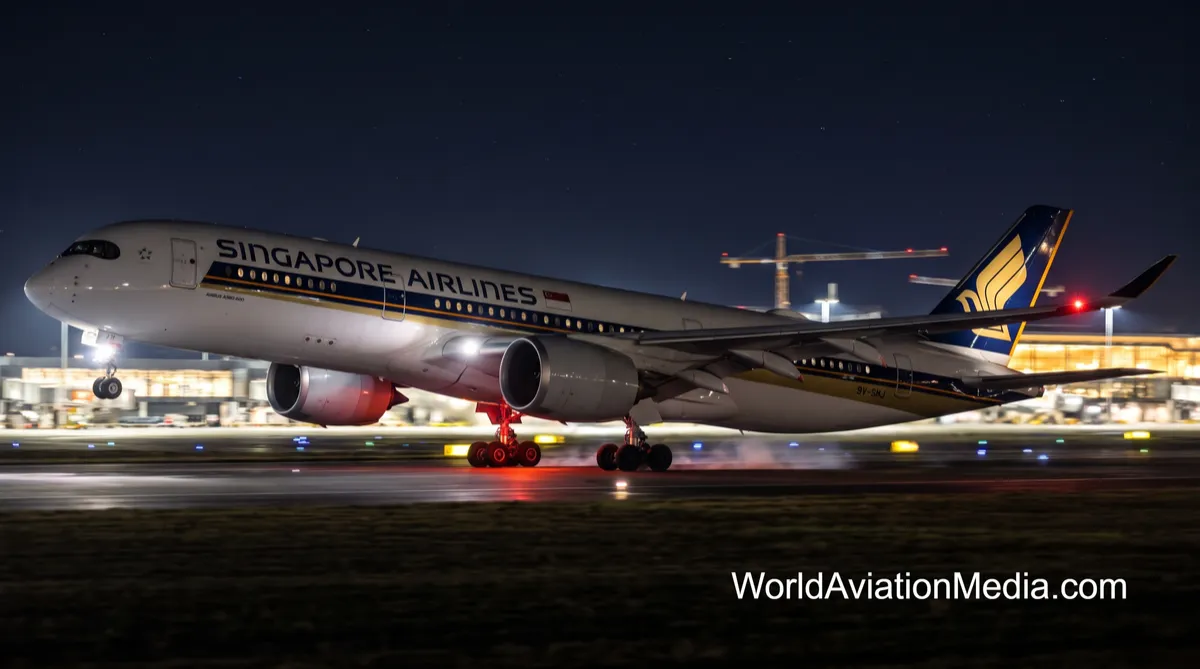
Singapore Airlines (SQ) | Singapore Changi (SIN) | Nov 23, 2026 | Flagship full-service catch; daily Airbus A350-900 leveraging 24/7 curfew-free late-night slots and using The Rayleigh Lounge. |
VietJet Air (VJ) | Ho Chi Minh City (SGN) | Jan 10, 2027 | Low-cost international play targeting Western Sydney's large Vietnamese diaspora. |
Fiji Airways (FJ) | Nadi (NAN) | Mar 19, 2027 | 3x weekly leisure and VFR service (plus U.S. one-stop connectivity via Nadi). |
QantasLink (QF) | Melbourne (MEL), Brisbane (BNE) | Mar 28, 2027 | Delayed 5 months post-opening; only 4x weekly per route using regional 94-seat Embraer E190s rather than mainline B737s. |
Notice who is missing from that table: Emirates, Qatar Airways, Etihad, Cathay Pacific, British Airways, United, Delta, American, Virgin Australia, and any Indian or Chinese mainland carrier (despite WSI actively courting Indian airlines ahead of the October opening). Even Qantas—Australia's national carrier—is relegating WSI to its low-cost subsidiary Jetstar at launch, waiting until March 28, 2027, to introduce just four weekly flights to Melbourne and Brisbane on small regional QantasLink Embraer E190 jets.
Four Structural Reasons Global Full-Service Carriers Are Holding Back
1. The Missing Train Link and the A$55 Shuttle Friction
For any global full-service airline, premium cabin yields (Business and First Class) make or break long-haul route profitability. High-yielding corporate travelers in Sydney are heavily concentrated in the CBD, North Sydney, and the Eastern Suburbs. Because the Sydney Metro – Western Sydney Airport rail link was delayed past the October 25, 2026 airport opening, WSI is launching without direct rail access.
Passengers relying on public transport must take the T1 Western Line train to St Marys station and transfer to the free WSI Link bus, which departs every 30 minutes, or board local suburban buses (Routes 772, 790, 825, 845, 860) from Penrith, Mount Druitt, Liverpool, or Campbelltown. Travelers heading to central Sydney via the direct Super Shuttle WSI electric coach face an hour-long road trip and a steep launch fare of A55one-way(A110 return). As The Guardian highlighted in its October 2026 fare analysis, while Jetstar's return fare from WSI to Melbourne starts at A187versusA258 from Kingsford Smith—a A$71 airfare saving—that discount is completely wiped out for anyone outside Western Sydney once ground transport costs are added.
2. Lack of Domestic Interline Feed (The "Orphan Spoke" Problem)
When a foreign carrier lands a 300-seat widebody at Sydney Kingsford Smith (SYD), up to 35% of its passengers connect onward to regional New South Wales, Canberra, Adelaide, Hobart, or Gold Coast. At WSI, there is virtually no domestic connecting grid. Worse still, even when Singapore Airlines launches daily A350-900 flights on November 23, 2026, passengers cannot book single-ticket connecting itineraries onto Qantas or Jetstar domestic flights at WSI. Every passenger on that A350 must originate or terminate exclusively in the local Sydney basin.
3. Airport Aeronautical Charges and Duplication Costs
Operating out of two airports in the same city requires an airline to duplicate ground handling contracts, line maintenance tooling, spare parts inventories, crew transport, and lounge contracts (Singapore Airlines has contracted to use the third-party Rayleigh Lounge at WSI rather than building a SilverKris facility). With airline profits squeezed globally in 2026—and Qantas reporting profits dipping to a four-year low in August 2026—carriers are unwilling to subsidize higher per-passenger airport charges at a greenfield terminal without guaranteed yield premiums.
4. The 11 PM to 6 AM Curfew Advantage Is a Double-Edged Sword
WSI's crown jewel is its 24/7 curfew-free status, contrasting sharply with Kingsford Smith's strict 11:00 p.m. to 6:00 a.m. curfew. For Singapore Airlines, arriving or departing around midnight at WSI unlocks highly efficient aircraft utilization and ideal morning bank connections at Changi. However, for a passenger landing at Badgerys Creek at 1:30 a.m. when suburban buses have stopped running (local buses operate 5:00 a.m. to 10:00 p.m.) and no train exists, the curfew-free window means an expensive middle-of-the-night ride-share or taxi fare.
The Long Game: Why WSI Will Eventually Fill Up
History shows that greenfield secondary airports—from Tokyo Narita and London Stansted to Montreal Mirabel and Milan Malpensa—almost always endure a turbulent infancy. Yet WSI possesses two undeniable long-term tailwinds: Western Sydney is one of Australia's fastest-growing demographic corridors (home to over 2.5 million people with massive VFR ties to South and Southeast Asia), and Kingsford Smith Airport is physically boxed in, suffering from airspace congestion where runway incursions and near-misses recently tracked 20% above the national average. Once the Sydney Metro rail line opens and Kingsford Smith hits an immovable wall of peak-hour slot exhaustion, global carriers will have no choice but to head west.
5-Item Q&A Section (FAQ)
Q1: When does Western Sydney International Airport (WSI) open to passengers?
Western Sydney International (Nancy-Bird Walton) Airport opens for scheduled passenger flights on Sunday, October 25, 2026, beginning with Jetstar flight JQ362 to the Gold Coast at 11:00 a.m., following the launch of cargo operations on July 27, 2026.
Q2: Which airlines are flying from Western Sydney Airport in 2026 and early 2027?
Jetstar (Gold Coast, Melbourne, Brisbane) and Air New Zealand (Auckland) launch in late October 2026, followed by Singapore Airlines (daily to Singapore) on November 23, 2026. In early 2027, VietJet Air (Ho Chi Minh City, Jan 10), Jetstar (Bali, Mar 15), Fiji Airways (Nadi, Mar 19), and QantasLink (Melbourne/Brisbane, Mar 28) will commence service.
Q3: Is there a train line open to Western Sydney Airport in October 2026?
No. The Sydney Metro rail link to the airport is not yet complete for the October 2026 opening. Passengers must use the free WSI Link shuttle bus (every 30 minutes to St Marys train station), suburban bus routes, or the A$55 one-way Super Shuttle WSI express bus to central Sydney.
Q4: Why did Singapore Airlines commit to Western Sydney Airport while other global carriers waited?
Singapore Airlines is utilizing WSI's 24/7 curfew-free operating status to schedule a late-night daily Airbus A350-900 rotation starting November 23, 2026—a time window during which flights are banned at curfew-restricted Sydney Kingsford Smith Airport.
Q5: Can passengers connect from Singapore Airlines to Qantas or Jetstar at Western Sydney Airport?
Not on a single ticket. Because Singapore Airlines and the Qantas Group are rivals without an interline agreement for domestic WSI feed, travelers cannot book single-ticket through-checked itineraries between them at launch.
Metadata
Target SEO Keywords: Western Sydney International Airport opening October 2026, Nancy-Bird Walton Airport airlines, WSI curfew-free flights, Singapore Airlines Western Sydney Airport, Jetstar WSI flights, Western Sydney Airport train link delay, Sydney second airport economics.
Hashtags: #WesternSydneyAirport #WSI #AustralianAviation #SydneyTravel #SingaporeAirlines #Qantas #AirportDevelopment
