United Airlines Q3 2026 Financial Results: Record $17.9B Revenue and $2.54 EPS Recapture 72% of $1.8B Fuel Spike
Key Takeaways
All-Time Record Q3 Revenue: United Airlines generated a record $17.9 billion in Q3 2026 operating revenue, up 17.4% year-over-year, driven by a 15.9% surge in TRASM and a 17.0% increase in overall passenger yields.
Solid Bottom-Line Profitability: United delivered Q3 2026 diluted EPS of $2.54 (squarely within guidance) and a 6.2% pre-tax margin, successfully recapturing 72% of its massive $1.8 billion year-over-year fuel expense increase within the quarter.
Balanced Cabin & Segment Strength: Premium revenue (including Economy Plus) grew 17.0% on a 2.5% capacity increase (PRASM +14.1%), while non-premium main cabin revenue rose 18.4% on a 0.5-point capacity increase (RASM +17.8%).
Corporate, Cargo, and Loyalty Acceleration: Contracted business revenue jumped 26% (overall business revenue +22%), cargo revenue surged 23% on stronger yields, and MileagePlus loyalty revenue climbed 17% alongside a 15% rise in Chase co-brand remuneration.
Peak CASM-ex and Q4 Guidance: Q3 CASM-ex rose 7.8% year-over-year—which management identified as the high-water mark reflecting the full run-rate of its new flight attendant contract—while Q4 2026 EPS was guided to $0.50–$1.50 assuming ~$4.80/gallon all-in fuel.
How Did United Airlines Achieve Record Q3 2026 Revenue and $2.54 EPS?
United Airlines Holdings, Inc. (NASDAQ: UAL) cemented its position alongside Delta at the top of the U.S. airline profitability hierarchy during the third quarter of fiscal year 2026. For the quarter ended September 30, 2026, United reported an all-time third-quarter record operating revenue of $17.9 billion, up 17.4% year-over-year. Total revenue per available seat mile (TRASM) rose 15.9% year-over-year, propelled by a 17.0% expansion in passenger yields while system load factor declined only modestly.
Despite facing a $1.8 billion year-over-year surge in quarterly jet fuel expenses, United posted diluted earnings per share of $2.54—landing squarely within management’s initial guidance range—and achieved a pre-tax margin of 6.2%. Most notably for institutional investors, United’s pricing power and network segmentation allowed the carrier to recapture 72% of the $1.8 billion fuel cost spike inside the third quarter alone.
Revenue & Operational Segment | Q3 2026 YoY Growth | Underlying Unit / Yield Driver |
Total Operating Revenue | +17.4% ($17.9 Billion) | TRASM +15.9% YoY; System Yields +17.0% YoY |
Premium Cabin Revenue | +17.0% YoY | +2.5% Premium Capacity; PRASM +14.1% YoY |
Non-Premium Main Cabin Revenue | +18.4% YoY | +0.5 pt Capacity; Main Cabin RASM +17.8% YoY |
Business Travel Revenue | +22.0% YoY | Contracted Corporate +26%; Business Yields +15% |
Leisure Travel Revenue | +16.0% YoY | Yield gains outpaced business; Load factor -1.3 pts |
Cargo Revenue | +23.0% YoY | Driven primarily by international airfreight yields |
MileagePlus Loyalty Revenue | +17.0% YoY | Chase remuneration +15%; Co-brand card spend +13% |
Deconstructing United Next: Premium vs. Non-Premium Revenue Dynamics
A central pillar of the United Next commercial strategy is de-commoditizing air travel by offering distinct product tiers—ranging from Polaris business class and Premium Plus to Economy Plus and Basic Economy. In Q3 2026, both ends of the aircraft outperformed expectations, proving that domestic capacity rationalization by distressed ultra-low-cost carriers (ULCCs) is lifting main cabin yields just as fast as premium cabins.
Premium Cabin Resilience
United’s premium revenue—encompassing United Polaris, United First, Premium Plus, and Economy Plus seating—increased 17.0% year-over-year on a 2.5% expansion in premium seat capacity. Premium revenue per available seat mile (PRASM) rose 14.1% year-over-year, demonstrating sustained willingness to pay among both affluent leisure flyers and international corporate travelers.
Main Cabin RASM Outperformance
In a notable inflection point, non-premium revenue grew 18.4% year-over-year on just a 0.5-point capacity increase, driving non-premium RASM up 17.8%—outpacing premium PRASM growth (+14.1%) by 3.7 percentage points. Leisure revenue expanded 16.0% year-over-year; while leisure load factors dipped 1.3 percentage points due to aggressive yield management, leisure yield gains actually exceeded business yield gains in percentage terms as price-sensitive domestic competitors pulled capacity out of United’s core mid-continent hubs (Chicago O'Hare, Denver, and Houston).
Corporate, Cargo, and Loyalty Engines
United’s B2B and diversified revenue streams fired simultaneously in Q3 2026:
Corporate Travel: Overall business revenue climbed 22% year-over-year with business yields up 15%, while contracted corporate revenue jumped 26% year-over-year as large multinational accounts expanded autumn travel budgets.
Air Cargo: United Cargo revenue surged 23% year-over-year, driven primarily by robust airfreight yields across transpacific and transatlantic widebody corridors.
MileagePlus & JPMorgan Chase: Loyalty revenue rose 17% year-over-year, supported by a 15% increase in cash remuneration from JPMorgan Chase and a 13% rise in total co-branded credit card portfolio spend.
Labor Cost Inflection (CASM-ex) and Q4 2026 Fuel Guidance
On the expense side of the ledger, United’s non-fuel unit cost (CASM-ex) increased 7.8% year-over-year in Q3 2026. Management emphasized on the earnings call that this 7.8% figure represents the high-water mark for United’s unit cost inflation. Two primary factors drove the Q3 CASM-ex spike:
Flight Attendant Collective Bargaining Agreement: Q3 2026 reflected the full run-rate cost of United’s newly ratified flight attendant labor contract, bringing all major workgroups onto current market-rate compensation scales.
Late-Quarter Capacity Trims: Tactical late-summer capacity reductions implemented to protect yields against spiking jet fuel reduced the ASM denominator over which fixed overheads were spread.
Q4 2026 Outlook and Starlink Integration
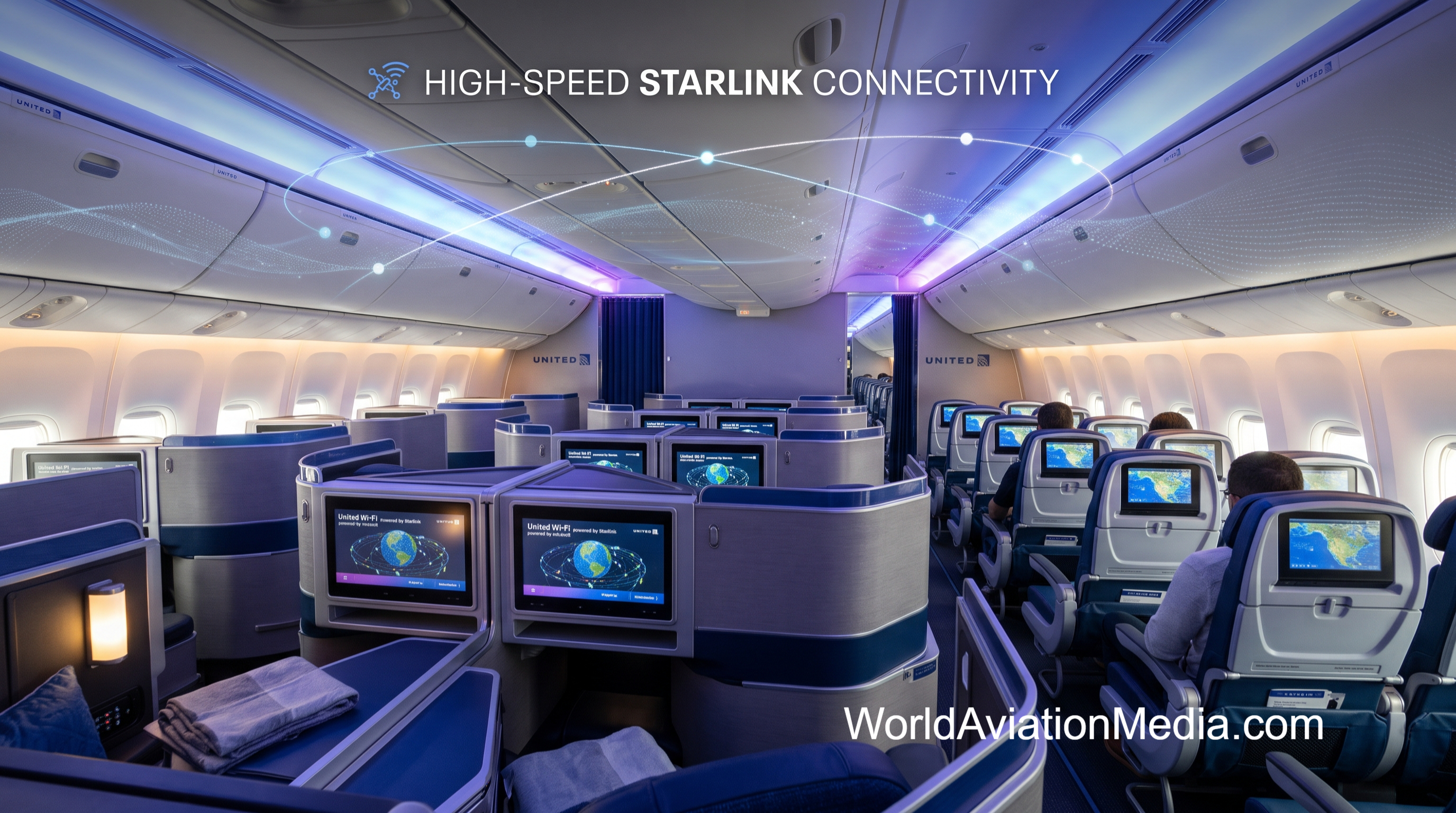
Looking ahead to the fourth quarter of 2026, United issued diluted EPS guidance of $0.50 to $1.50. This wide range is anchored on an assumed all-in fourth-quarter jet fuel price of approximately $4.80 per gallon. Even at $4.80/gallon fuel—a price level that pushes more than half of North American airlines into deep fourth-quarter net losses—United expects to remain solidly profitable in Q4 while continuing its accelerated fleet-wide rollout of free high-speed Starlink satellite Wi-Fi and seatback entertainment upgrades.
5-Item Q&A Section (FAQ)
Q1: What were United Airlines' Q3 2026 revenue and EPS results?
United Airlines reported record third-quarter revenue of $17.9 billion (+17.4% YoY) and diluted earnings per share of $2.54, achieving a 6.2% pre-tax margin within management's guidance range.
Q2: How much of its Q3 2026 fuel cost increase did United Airlines recapture through pricing?
United faced a $1.8 billion year-over-year increase in fuel expenses during Q3 2026, and successfully recaptured 72% of that increase within the quarter through a 15.9% rise in TRASM and a 17.0% increase in passenger yields.
Q3: How did United's non-premium main cabin perform compared to premium cabins in Q3 2026?
While premium revenue grew 17.0% (PRASM +14.1%) on 2.5% higher capacity, non-premium revenue grew even faster at 18.4% (RASM +17.8%) on a 0.5-point capacity increase, reflecting strong domestic pricing power.
Q4: Why did United Airlines' CASM-ex rise 7.8% in Q3 2026?
United's 7.8% year-over-year CASM-ex increase reflected the full run-rate implementation of its new flight attendant labor deal combined with late-quarter capacity reductions. Management stated Q3 2026 will be the high-water mark for CASM-ex growth.
Q5: What is United Airlines' EPS and fuel price guidance for Q4 2026?
United guided Q4 2026 diluted EPS to a range of $0.50 to $1.50, assuming an average all-in fourth-quarter jet fuel price of approximately $4.80 per gallon.
Metadata
Target SEO Keywords: United Airlines Q3 2026 financial results, UAL Q3 2026 earnings call highlights, United Airlines $17.9B record revenue, United Next premium PRASM, UAL Q4 2026 EPS guidance $4.80 fuel, MileagePlus Chase remuneration 2026, United flight attendant contract CASM-ex.
Hashtags: #UnitedAirlines #UALStock #Q32026Earnings #UnitedNext #AviationFinance #AirlineStocks #StarlinkAviation
