Hybrid-Electric Retrofits: Technical Feasibility and Cost-Benefit Ratios for Legacy GA Fleets
Key Takeaways
The Legacy Challenge: The global general aviation (GA) fleet consists of hundreds of thousands of aging piston aircraft whose emissions and fuel operating costs represent a major sustainability hurdle.
Retrofit Engineering: Hybrid-electric conversion involves pairing legacy internal combustion engines or replacing them entirely with lightweight electric motors, high-density battery packs, and auxiliary turbogenerators.
Economic Trade-Offs: While initial conversion capital expenditures are high, operators realize long-term operational savings through slashed fuel burn and reduced engine maintenance cycles.
Weight and Range Realities: Battery energy density limitations mean current hybrid retrofits are best optimized for short-to-medium-range regional missions, flight training, and agricultural utility.
Introduction
As the commercial aviation sector aggressively pursues net-zero emission trajectories, general aviation (GA) faces a unique existential dilemma. With hundreds of thousands of legacy piston-engine aircraft—such as Cessna Skyhawks and Piper Cherokees—comprising the backbone of global flight training and private transit, replacing the entire active fleet with brand-new clean-sheet electric aircraft is economically and industrially impossible. The solution gaining serious momentum across engineering facilities is the hybrid-electric retrofit: converting existing airframes into cleaner, more efficient hybrid machines.
Engineering the Hybrid Conversion
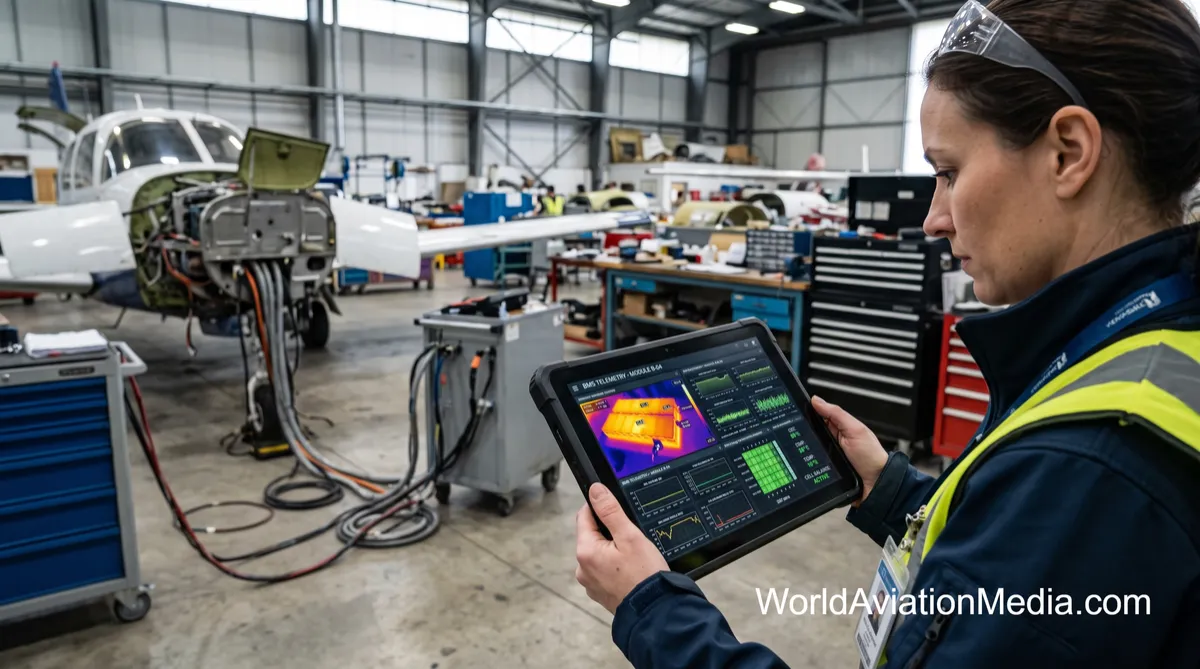
Retrofitting a legacy airframe is an intricate exercise in weight, balance, and aerospace engineering. A standard GA airframe is meticulously weight-balanced around a heavy internal combustion engine in the nose. Introducing electric propulsion requires integrating a high-torque electric motor, inverter controllers, lightweight battery banks, and often a small auxiliary turbogenerator or range-extending fuel generator.
Engineers must meticulously recalculate the aircraft's center of gravity and structural load limits. Because current battery energy density still lags significantly behind traditional aviation gasoline (AvGas) on a pound-for-pound basis, designers must carefully balance battery weight against passenger and payload capacity. The most viable retrofit architectures utilize parallel or series hybrid configurations, where the internal combustion engine (or generator) handles cruise efficiency while the electric motor provides instant torque for takeoff, climb, and emergency backup.
The Cost-Benefit Ratio: Analyzing the Ledger
For flight school operators, corporate fleet managers, and private owners, the decision to retrofit boils down to a strict economic cost-benefit ledger:
Initial Capital Expenditure (CapEx): Retrofitting an existing airframe requires a significant upfront investment for the STC (Supplemental Type Certificate) kit, new propulsion hardware, and certified battery packs.
Operational Expenditure (OpEx) Savings: Once operational, hybrid aircraft slash daily fuel consumption and drastically reduce costly engine overhauls. Electric motors feature far fewer moving parts than traditional reciprocating engines, translating into significantly lower routine maintenance expenditures.
Insulation Against Fuel Volatility: By supplementing fossil fuels with electrical energy, operators insulate themselves against unpredictable AvGas price spikes and tightening environmental regulations.
Mission Profiles and Operational Limitations
Hybrid-electric retrofits are not a universal panacea for every GA mission. Due to payload and range constraints imposed by current battery chemistry, retrofitted aircraft are ideally suited for specific operational niches:
Flight Training Academics: High-frequency, short-duration local pattern work and basic maneuver training where rapid aircraft turnaround and low noise signatures are prized.
Regional Utility and Cargo: Short-hop courier services connecting regional airfields where charging infrastructure is accessible.
Agricultural and Patrol Flying: Specialized utility flights operating out of fixed home bases with predictable daily radii.
Certification Pathways and the Road Ahead
The ultimate catalyst for widespread hybrid retrofits is regulatory validation. Securing FAA or EASA Supplemental Type Certificates (STCs) for aftermarket propulsion conversions requires exhaustive flight testing, electromagnetic interference (EMI) shielding verification, and rigorous fire-containment safety testing for high-voltage battery packs. As pioneering engineering firms successfully clear these regulatory hurdles, hybrid-electric retrofitting is poised to transition from experimental niche engineering into a mainstream industry standard.
5-Item Q&A Section
Q1: Why are hybrid-electric retrofits targeted at legacy general aviation aircraft?
A: Replacing the massive global fleet of existing piston aircraft with brand-new clean-sheet electric planes is cost-prohibitive, making retrofits a practical bridge to sustainability.
Q2: What is the primary engineering challenge when converting a piston aircraft to hybrid?
A: Managing weight and balance, specifically compensating for the heavy weight and volumetric footprint of current battery energy storage systems.
Q3: How do hybrid retrofits lower ongoing operating costs (OpEx)?
A: By reducing daily fuel burn and cutting expensive engine overhaul cycles, as electric motors feature fewer moving parts than traditional internal combustion engines.
Q4: Which mission profiles are best suited for hybrid-retrofit GA aircraft?
A: Flight training academies, local pattern work, short-hop regional transport, and agricultural utility operations with predictable flight ranges.
Q5: What regulatory milestone is required before a hybrid retrofit can be sold commercially?
A: Obtaining an FAA or EASA Supplemental Type Certificate (STC), which involves rigorous safety, structural, and electrical testing.
SEO & AEO Optimization
Core User Intent: Explore the technical feasibility, engineering hurdles, and cost-benefit ratios of hybrid-electric retrofits for legacy general aviation fleets.
Direct Answer Definition: A hybrid-electric retrofit refers to the aftermarket modification of legacy piston aircraft by integrating electric motors, battery packs, and range-extending generators to reduce emissions and operating costs.
Keywords & Hashtags
Keywords: hybrid-electric retrofit, general aviation decarbonization, legacy aircraft electrification, hybrid piston conversion, STC electric aircraft, GA fleet sustainability.
Hashtags: #HybridAviation #ElectricFlight #GeneralAviation #Retrofit #SustainableAviation #AviationEngineering
