Europe's Collaborative Combat Aircraft Race: Airbus U740 Valkyrie and the 2029 Luftwaffe Mandate
Key Takeaways
First Flight Milestone: Airbus Defence and Space executed landmark flight testing for its autonomous unmanned wingman concepts, anchoring Europe's Collaborative Combat Aircraft (CCA) race alongside global milestones.
The 2029 Luftwaffe Mandate: The German Air Force (Luftwaffe) has established an aggressive timeline to operationalize loyal wingman swarming drones by 2029 to protect crewed Eurofighter and future fighter assets.
Global Parallel Milestones: While Airbus advances its unmanned portfolio, South Korea’s KAI achieved significant manned-unmanned teaming (MUM-T) milestones with its Advanced Medium Combat Aircraft and loyal wingman programs.
Cost-Effective Attritable Force: CCAs provide force multiplication, acting as sensor nodes, electronic warfare jammers, and kinetic missile carriers at a fraction of the cost of crewed fighters.
The Rise of the Autonomous Wingman
The modern air combat paradigm is undergoing a structural revolution. As near-peer air defense systems become increasingly lethal, sending expensive, crewed 4.5- and 5th-generation fighter jets into heavily contested airspace is no longer tactically viable. To solve this dilemma, air forces worldwide are racing to field Collaborative Combat Aircraft (CCA)—low-cost, highly autonomous "loyal wingman" drones designed to fly alongside crewed fighters, draw enemy fire, jam radar networks, and deliver precision munitions.
In Europe, this race entered a decisive operational phase with flight testing of Airbus unmanned concepts like the U740 Valkyrie family, operating under stringent military mandates. Most notably, the German Air Force (Luftwaffe) has established a firm operational mandate requiring deployable CCA squadrons by 2029, forcing European defense primes to compress decades of procurement bureaucracy into rapid, iterative software and hardware prototyping.
The Luftwaffe 2029 Mandate and Airbus Execution
The German military's 2029 timeline is one of the most aggressive acquisition schedules in recent European defense history. Driven by shifting geopolitical realities along NATO’s eastern flank, the Luftwaffe requires uncrewed platforms capable of integrating seamlessly with existing Eurofighter Typhoon fleets and future bridge platforms before a clean-sheet sixth-generation fighter materializes.
Airbus Defence and Space has responded by accelerating its unmanned portfolio, incorporating lessons learned from early combat cloud demonstrators. These autonomous platforms are designed around key operational pillars:
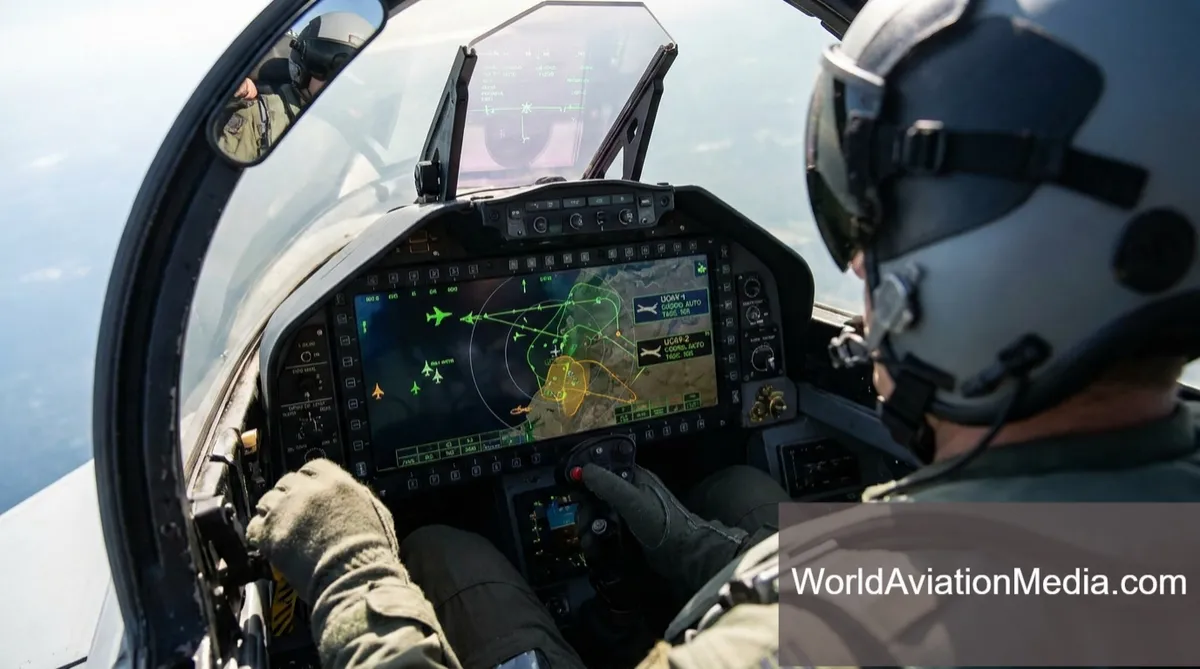
Manned-Unmanned Teaming (MUM-T): Allowing a pilot in a lead Eurofighter to command multiple autonomous drones via encrypted, jam-resistant data links, delegating targeting and reconnaissance tasks without increasing cockpit workload.
Modular Payload Bays: Swapping payloads rapidly between electronic warfare (EW) jamming pods, electro-optical reconnaissance sensors, and internal weapon stations.
Low-Cost Attritability: Engineering airframes using affordable composite materials and commercial-off-the-shelf components so that the loss of a drone in combat does not fracture defense budgets.
"The 2029 Luftwaffe mandate transforms loyal wingman technology from a theoretical research project into an urgent operational necessity, accelerating Europe's uncrewed air combat race." — Defense Aviation Review, 2026
Global Parallels: South Korea's MUM-T Milestones
Europe is not alone in this compressed timeline. In the Asia-Pacific region, South Korea’s Korea Aerospace Industries (KAI) achieved major milestones in manned-unmanned teaming (MUM-T), pairing KF-21 Boramae fighters with indigenous unmanned combat aerial vehicles. This global synchronization of CCA development underscores a universal military truth: numerical mass and tactical survivability in future conflicts will belong to whichever nation masters autonomous swarming software first.
The Software-Defined Air Force
Ultimately, the success of Europe's CCA race will not be decided by aerodynamics or engine thrust alone, but by software. Artificial intelligence algorithms governing autonomous decision-making, target recognition, and cooperative swarm tactics must prove infallible under intense electronic warfare conditions. As Airbus, KAI, and global defense contractors push toward their late-2020s deadlines, the skies are rapidly transitioning into a domain where algorithms dictate tactical survival.
5-Item Q&A Section (FAQ)
Q1: What is a Collaborative Combat Aircraft (CCA)?
A CCA is an autonomous, low-cost "loyal wingman" drone designed to fly alongside crewed fighter jets to provide sensor data, electronic warfare support, and weapon delivery.
Q2: What is the Luftwaffe's timeline for operationalizing these drones?
The German Air Force (Luftwaffe) has established an aggressive operational mandate requiring deployable CCA squadrons by 2029.
Q3: Which defense prime is leading major uncrewed wingman concepts in Europe?
Airbus Defence and Space is advancing key unmanned platforms and combat cloud architectures to meet European military mandates.
Q4: How do crewed fighters interact with CCAs in combat?
Through advanced manned-unmanned teaming (MUM-T) software and secure data links, pilots can issue tactical commands to multiple autonomous drones simultaneously.
Q5: Why are militaries prioritizing CCAs over additional crewed fighters?
CCAs offer force multiplication at a fraction of the cost, protecting human pilots and expensive airframes from high-threat air defense networks.
Metadata
Target SEO Keywords: Airbus U740 Valkyrie loyal wingman, Luftwaffe 2029 CCA mandate, Collaborative Combat Aircraft Europe, manned unmanned teaming KAI South Korea, autonomous military drones 2026.
Hashtags: #CCADrones #Luftwaffe #Airbus #MilitaryTech #AutonomousFlight #FutureWarfare
