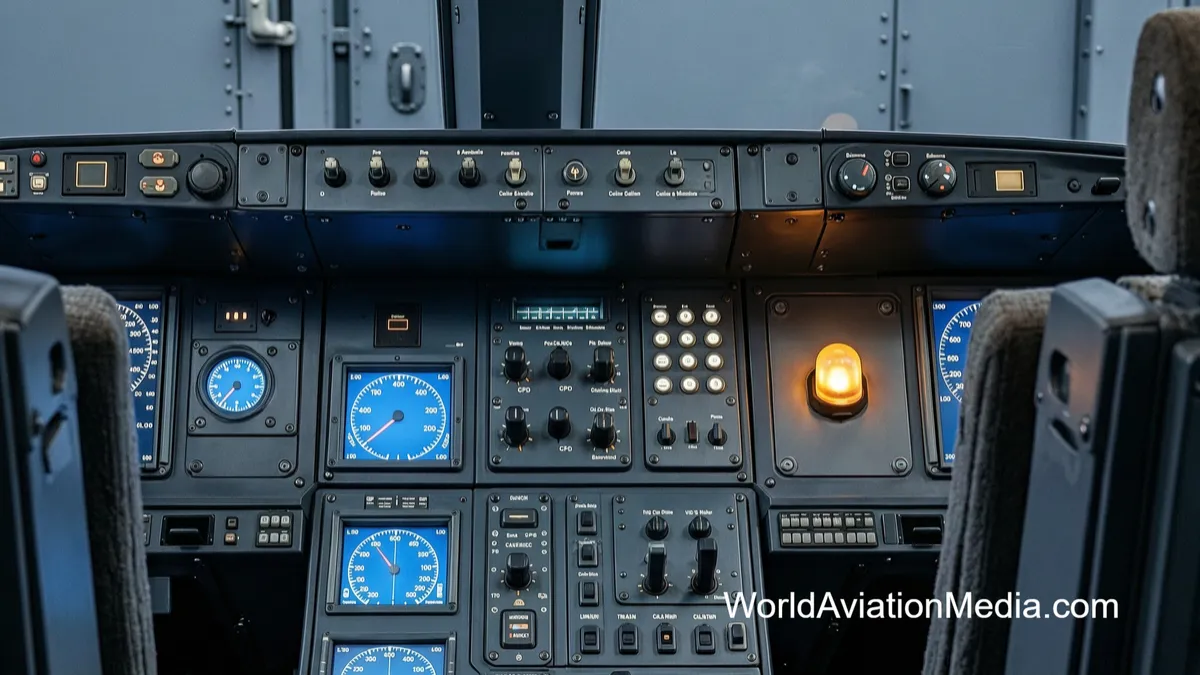
Cockpit Security & Pilot Psychological Screening in 2026: Inside the Global Safety Debate Triggered by the FlyDubai Flight 1073 Incident
Key Takeaways
The FZ1073 Wake-Up Call: The September 30, 2026 emergency diversion of FlyDubai Flight FZ1073 to Tabuk, Saudi Arabia—during which the aircraft plunged over 17,000 feet in under two minutes amid an intra-cockpit violent attack on Captain Machchhar—has shattered industry complacency over flight-deck security.
The Post-9/11 Door Paradox: Reinforced cockpit doors certified under ICAO Annex 6, FAA 14 CFR § 25.795, and EASA CS-25.795 feature a DENY switch that locks out keypad entry for up to 30 minutes—meaning that when a threat originates inside the cockpit, the door traps the victim and blocks cabin crew rescue.
Failure of the "Two-in-Cockpit" Rule: Standard procedural safeguards and Safety and Emergency Procedures (SEP) manuals contain virtually no defense against unprovoked violence between the two operating pilots already seated at the controls.
Blind Spots in Crew Vetting: Current aeromedical frameworks (EASA CAT.GEN.MPA.175 and post-Germanwings Pilot Support Programmes) test for clinical depression, fatigue, and substance abuse, but fail to detect ideological extremism, criminal intent, or acute behavioral shifts between medical exams—compounded by questions over whether the weapon came from an onboard crash axe or bypassed ICAO Annex 17 screening.
Two Minutes Over the Desert: How Flight FZ1073 Changed the Security Paradigm
On September 30, 2026, FlyDubai Flight FZ1073 was cruising at altitude when telemetry captured by Flightradar24 recorded every airline executive's worst nightmare: the aircraft entered a violent dive, plunging more than 17,000 feet in under two minutes before recovering and executing an emergency diversion into Tabuk, Saudi Arabia. As investigators from the UAE's General Civil Aviation Authority (GCAA) and Saudi authorities pieced together the cockpit voice and flight data recorders, the aviation world learned that the crisis was not caused by catastrophic mechanical failure or severe clear-air turbulence. It was triggered by a violent physical assault inside the flight deck between the operating flight crew.
Had Captain Machchhar been immediately incapacitated during the struggle at the controls, the armored cockpit door—engineered after September 11, 2001, to save lives—would have sealed the fate of everyone on board.
"Following the 9/11 terrorist attacks, global airline security was engineered around a single assumption: keeping the threat outside the cockpit from getting in. Flight FZ1073 forces regulators to confront a far more terrifying question: what happens when the threat is already strapped into the right or left seat?" — Aviation Security Analysis on the September 30, 2026 Tabuk Diversion
Eleven years after Germanwings Flight 9525 was deliberately flown into the French Alps by a suicidal first officer in March 2015—and more than two decades after EgyptAir Flight 990 and SilkAir Flight 185—the September 30, 2026 FlyDubai incident has forced the FAA, EASA, ICAO, and the GCAA to re-evaluate the twin pillars of modern commercial flight safety: physical flight-deck access engineering and international pilot psychological/security vetting.
The Engineering Paradox: Why Post-9/11 Doors Become Traps During Insider Attacks
Commercial flight-deck access architecture is governed globally by harmonized standards encoded in ICAO Annex 6, FAA 14 CFR § 25.795, and EASA CS-25.795. Adopted in the aftermath of the September 11 hijackings, these airworthiness mandates require commercial transport aircraft to feature ballistically reinforced, intrusion-resistant cockpit doors capable of withstanding small-arms fire, fragmentation devices, and brute-force battering.
Under normal operations, if both pilots become incapacitated due to hypoxia or medical emergencies, the senior cabin crew member can enter an emergency access code on the exterior keypad. After an audible chime delay of 30 to 60 seconds, the solenoid latch releases for five seconds to allow cabin crew entry. However, to prevent hijackers from torturing a flight attendant into typing the emergency code, the system grants the pilots inside the cockpit an ultimate trump card: the spring-loaded toggle switch ("NORM / UNLOCK / DENY").
When an insider threat toggles that switch to the DENY position, the exterior keypad is completely disabled for 5 to 30 minutes (depending on the aircraft configuration), and can be repeatedly reset from inside.
Cockpit Security Mechanism | Primary Regulatory Standard | Designed Threat Scenario | Vulnerability Exposed by FlyDubai FZ1073 (Sept 2026) |
Armored Door & DENY Switch | ICAO Annex 6 / FAA 14 CFR § 25.795 / EASA CS-25.795 | Hostile passengers or hijackers attempting forced entry from the cabin. | Allows a rogue pilot to lock out cabin crew assistance for up to 30 minutes while attacking the other pilot. |
Two-in-Cockpit Rule | Post-2015 Airline SOPs (variously repealed/retained) | Prevents a lone pilot from locking out a colleague taking a lavatory break. | Zero protection when both operating pilots are already seated at the controls and violence erupts. |
Onboard Crash Axe Storage | Airworthiness emergency equipment rules | Prying open jammed panels or fighting hidden cabin fires. | Provides a lethal melee weapon directly inside the locked flight deck if not relocated or removed. |
Crew Security Screening | ICAO Annex 17 (Aviation Security) | Preventing contraband from entering airside sterile areas. | Potential bypass via crew lanes, catering, or maintenance channels at major hubs like DXB. |
Why Engineering "Fixes" Create New Cybersecurity Nightmares
In the immediate aftermath of the October 2026 FZ1073 disclosures, aerospace engineers debated two hardware modifications to prevent a rogue pilot from weaponizing the DENY switch:
Flight-Envelope Exceedance Auto-Unlock: Programming the cockpit door logic to automatically disengage the DENY lock and unlatch the door if the Flight Control Computers detect an extreme flight-envelope exceedance—such as FZ1073's >8,500 feet-per-minute dive without an active terrain or TCAS resolution advisory.
Encrypted Ground-to-Air Override: Allowing an airline's System Operations Control (SOC) or state air defense authorities to transmit an encrypted satellite signal that overrides the DENY switch from the ground.
Both proposals face fierce resistance from aviation cybersecurity specialists. Introducing any remote radio-frequency or satellite command pathway tied to cockpit door solenoids creates a catastrophic attack surface for state-sponsored hackers or onboard signal spoofing. Similarly, an automatic G-load or dive-rate door release could be exploited by cabin hijackers during severe turbulence or violent evasive maneuvers.
Even more urgent is the question of weapon sourcing on Flight FZ1073. Investigators have zeroed in on three possibilities: a weapon that bypassed crew screening under ICAO Annex 17 at Dubai International Airport (DXB), an item planted via catering or line-maintenance access channels, or the aircraft's own mandatory onboard cockpit crash axe. For decades, aviation regulators have mandated keeping a heavy steel crash axe mounted behind the pilot seats—an archaic holdover from piston-era aviation that effectively places a lethal weapon within arm's reach of an unstable crew member. Expect EASA and the FAA to face immediate pressure to replace cockpit crash axes with non-lethal composite crowbars or move them to dual-key cabin lockers.
The Vetting Blind Spot: Why Post-Germanwings Screening Failed
Following the 2015 Germanwings disaster, EASA enacted CAT.GEN.MPA.175 and mandated peer-led Pilot Support Programmes (PSPs) alongside psychological testing prior to initial line employment. Why didn't those barriers prevent FZ1073?
Clinical Psychiatry vs. Behavioral/Ideological Threat: Annual Class 1 medical exams and EASA CAT.GEN.MPA.175 protocols are designed by aviation doctors to identify clinical depression, psychosis, neurocognitive decline, fatigue, and alcohol or substance abuse. They are not forensic behavioral assessments designed to detect ideological radicalization, sudden financial desperation, interpersonal malice, or criminal intent that develops between annual medical renewals.
Global Expatriate Pilot Background Check Fragmentation: Fast-growing Middle Eastern and Asian carriers recruit pilots from over 100 nationalities. While an aviation security background check (ASIC/SIDA) in Australia, the U.S., or the EU queries domestic criminal registries, an airline hiring an expatriate pilot from a jurisdiction with fragmented intelligence sharing or limited digital records can only verify that the applicant holds no documented criminal convictions—not whether they pose a latent behavioral or extremist security risk.
Absence of Intra-Crew Violence in SEP Manuals: While cabin crew undergo rigorous training to restrain unruly passengers in the cabin, Airline Safety and Emergency Procedures (SEP) manuals contain zero tactical protocols for how a pilot strapped into a five-point harness should defend the flight controls against an armed colleague sitting 24 inches away.
As the GCAA, EASA, and FAA formulate their formal policy responses to FZ1073 in late 2026, the industry is heading toward mandatory removal of cockpit crash axes, continuous cross-border security intelligence vetting for flight crews, and a fundamental rethink of the 30-minute DENY switch lockout.
5-Item Q&A Section (FAQ)
Q1: What happened on FlyDubai Flight FZ1073 on September 30, 2026?
On September 30, 2026, FlyDubai Flight FZ1073 experienced a violent intra-cockpit attack against Captain Machchhar, causing the aircraft to plunge over 17,000 feet in under two minutes before recovering and making an emergency diversion to Tabuk, Saudi Arabia.
Q2: How does a commercial airliner's cockpit door DENY switch work?
Certified under ICAO Annex 6, FAA 14 CFR § 25.795, and EASA CS-25.795, reinforced cockpit doors allow cabin crew to enter an emergency keypad code that unlocks the door after 30–60 seconds; however, a pilot inside can flip the DENY switch to completely lock out the keypad for up to 30 minutes.
Q3: Why didn't the "two-in-cockpit" rule prevent the FlyDubai FZ1073 incident?
The "two-in-cockpit" rule was designed after the 2015 Germanwings crash to prevent a lone pilot from locking out another pilot who steps out to use the lavatory. It offers no protection when both operating pilots are seated at the controls and one attacks the other.
Q4: How could a weapon get inside a commercial airline cockpit?
Investigators examining FZ1073 identified three primary vectors: an onboard cockpit crash axe (standard emergency equipment mounted in the flight deck), a weapon that bypassed crew security screening under ICAO Annex 17, or an item introduced via catering/maintenance access.
Q5: What are the limitations of EASA CAT.GEN.MPA.175 pilot psychological screening?
EASA CAT.GEN.MPA.175 and Pilot Support Programmes screen pilots for clinical psychiatric disorders, substance abuse, and severe fatigue, but are not designed to detect ideological extremism, criminal intent, or acute behavioral changes occurring between annual medical exams.
Metadata
Target SEO Keywords: FlyDubai Flight 1073 incident, FZ1073 Tabuk diversion, cockpit door security 2026, pilot psychological screening EASA CAT.GEN.MPA.175, FAA 14 CFR 25.795 cockpit door deny switch, ICAO Annex 17 crew screening, aviation insider threat.
Hashtags: #AviationSafety #CockpitSecurity #FlyDubai1073 #FlightSafety #PilotScreening #EASA #ICAO
