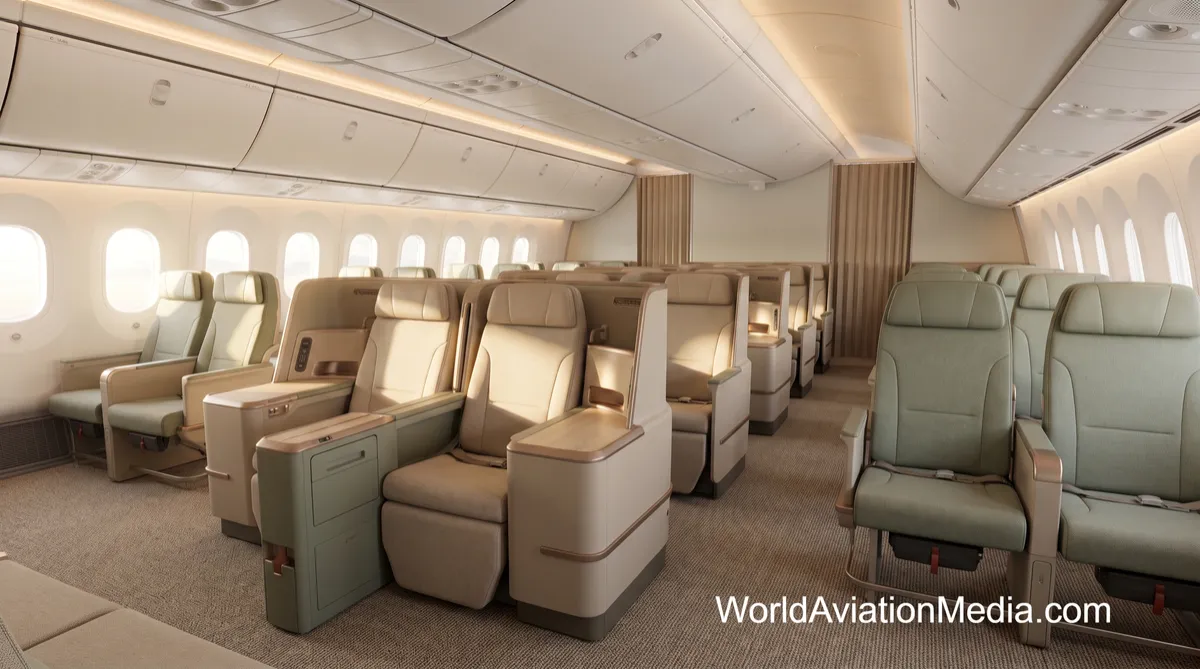
Cabin Interior Decarbonization: Circular-Economy Materials and Zero-Emission Technologies
Key Takeaways
Lifecycle Sustainability: Airlines and business jet manufacturers are shifting focus from operational emissions to cabin interior lifecycles, embracing circular-economy materials and lightweight architecture.
Innovative Bio-Materials: Traditional petroleum-based plastics and synthetic foams are being replaced by bio-composites derived from hemp, flax, mushroom mycelium, and recycled marine plastics.
Weight Reduction Payoffs: Shaving kilograms off cabin seating, galleys, and bulkheads directly reduces aircraft fuel burn and carbon emissions over millions of flight miles.
End-of-Life Circularity: Modern cabin design mandates complete recyclability, ensuring retired aircraft interiors avoid landfills through structured reclaim and repurpose loops.
Introduction
When discussing aviation decarbonization, attention is almost exclusively directed toward engines, sustainable aviation fuels, and propulsion breakthroughs. However, a quiet revolution is taking place inside the pressurized aluminum and composite hulls of commercial airliners and ultra-long-range business jets. Cabin interior decarbonization has emerged as a critical frontier for manufacturers and airlines committed to true lifecycle sustainability. By fusing circular-economy principles with advanced lightweight engineering, the modern aircraft cabin is shedding its carbon footprint from floorboards to overhead bins.
The Lifecycle Footprint of Aircraft Cabins
An aircraft interior endures brutal operational abuse, requiring periodic cabin refreshes every 5 to 7 years. Historically, this meant millions of tons of retired seats, plastic sidewalls, carpets, and galleys ended up in landfills. Furthermore, heavy traditional interior materials contributed significantly to the baseline operating weight of the aircraft, silently compounding fuel burn and carbon emissions across every flight hour.
Today, sustainability standards demand accountability across the entire cradle-to-grave lifecycle. Manufacturers are redesigning cabins not just for passenger comfort and aesthetic luxury, but for maximum weight efficiency and eventual full recyclability.
Advanced Bio-Materials and Circular Substitutes
The material palette of the modern aircraft cabin is undergoing a radical transformation:
Natural Fiber Composites: Heavy fiberglass and synthetic resins are being replaced by high-strength structural composites woven from natural flax, hemp, and basalt fibers, offering identical crash-safety and flame-retardant properties at a fraction of the carbon cost.
Mycelium and Plant-Based Foams: Cushioning foams derived from petroleum are giving way to biodegradable mycelium-based foams and plant-derived polymers for seat padding and insulation blankets.
Upcycled Marine Plastics and Textiles: Carpets and soft-furnishing fabrics are increasingly woven from 100% recycled ocean plastics and discarded fishing nets, combining extreme durability with verifiable circular traceability.
The Economics of Weight Reduction
In aviation, weight is the absolute enemy of efficiency. Every single kilogram removed from a commercial airliner cabin translates into measurable lifetime fuel savings and reduced CO2 emissions.
Tier-1 interior outfitters are utilizing generative design software and 3D printing (additive manufacturing) to create lattice-structured seat frames and galley partitions that are up to 40% lighter than traditional machined aluminum components. In the business jet sector—where bespoke luxury often added substantial weight—designers are proving that exquisite craftsmanship and ultra-lightweight carbon-fiber cores can coexist harmoniously.
Closed-Loop Manufacturing and End-of-Life Recyclability
True circularity requires designing interiors with their eventual decommissioning in mind. Leading cabin manufacturers are establishing closed-loop supply chains where every component is tagged with digital material passports.
When an aircraft is retired or undergoes a cabin refit, these passports guide technicians on how to rapidly disassemble and sort materials for high-value recycling. Aluminum frames are re-melted, thermoplastic panels are re-extruded into new structural parts, and natural fibers are composted or repurposed into industrial insulation. By eliminating waste and reducing baseline weight, cabin interior decarbonization is proving that sustainability and luxury can soar together.
5-Item Q&A Section
Q1: Why is cabin interior decarbonization important for aviation sustainability?
A: Because heavy cabin materials increase baseline fuel burn, and traditional cabin refreshes historically generated massive amounts of landfill waste during refits.
Q2: What eco-friendly materials are replacing traditional petroleum plastics in cabins?
A: Natural flax and hemp fiber composites, mycelium-based cushioning foams, and textiles woven from recycled ocean plastics.
Q3: How does weight reduction in cabin design impact aircraft emissions?
A: Lighter seating, galleys, and bulkheads directly reduce overall aircraft fuel consumption and greenhouse gas emissions over millions of operational flight miles.
Q4: What is a "digital material passport" in modern aircraft cabins?
A: A tracking system that identifies the exact material composition of interior components to facilitate rapid sorting and recycling at the end of their lifecycle.
Q5: How do business jet manufacturers balance luxury with sustainability?
A: By utilizing advanced additive manufacturing (3D printing) and generative design to create ultra-lightweight carbon-composite frames wrapped in sustainably sourced natural materials.
SEO & AEO Optimization
Core User Intent: Explain how airlines and business jet manufacturers are integrating circular-economy materials and zero-emission cabin technologies.
Direct Answer Definition: Cabin interior decarbonization refers to the practice of utilizing lightweight bio-materials, recycled polymers, and circular-economy design principles to eliminate waste and reduce lifetime aircraft emissions.
Keywords & Hashtags
Keywords: cabin interior decarbonization, circular-economy aviation, sustainable aircraft cabins, eco-friendly business jet interiors, lightweight aircraft materials, closed-loop cabin manufacturing.
Hashtags: #SustainableDesign #CircularEconomy #AviationInterior #EcoFriendly #BusinessJet #GreenAviation
