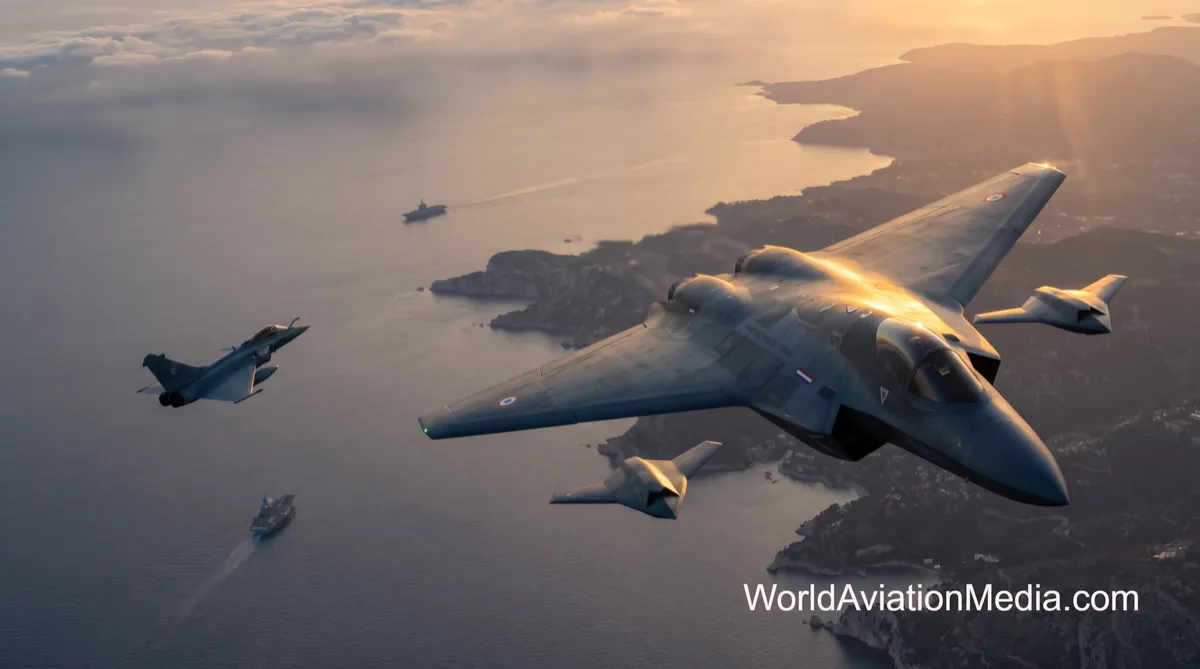
After FCAS: Can France Afford a Solo 6th-Generation Nuclear and Carrier-Borne Fighter?
Key Takeaways
The FCAS Collapse: Following the official collapse of the joint French-German-Spanish Future Combat Air System (FCAS) fighter pillar in June 2026, France has charted a sovereign national course for its sixth-generation air combat capability.
The Rafale F5 Bridge: To maintain tactical dominance while a brand-new airframe is developed, Paris is accelerating the Rafale F5 program—dubbed the "Super Rafale"—to serve as the central node for nuclear deterrence and naval aviation.
Dassault's Industrial Burden: Dassault Aviation faces the immense financial and intellectual challenge of acting as sole prime contractor for a complex next-generation fighter without German or Spanish cost-sharing.
Diverging European Paths: While the UK, Italy, and Japan advance the Global Combat Air Programme (GCAP), and France goes solo, Europe's fragmented defense industrial base faces intense budgetary pressures.
The Splintering of European Air Combat
For years, the Future Combat Air System (FCAS)—linking France, Germany, and Spain in a grand trilateral vision for a sixth-generation Next-Generation Weapon System (NGWS), remote carriers, and a combat cloud—was hailed as the pinnacle of European defense cooperation. That vision suffered a decisive blow in June 2026, when deep industrial disagreements between Dassault Aviation and foreign partners led to the formal cancellation of the joint fighter pillar.
For Paris, the collapse forces a high-stakes strategic pivot. Rather than compromising on workshare, intellectual property rights, or aircraft specifications, France has chosen to go it alone, tasking Dassault Aviation with leading a sovereign national sixth-generation fighter program. Yet this bold assertion of strategic autonomy carries a crushing financial and industrial price tag. Can a mid-sized European power single-handedly fund, build, and sustain a next-generation combat aircraft while simultaneously maintaining nuclear deterrence and carrier aviation?
The Rafale F5: Bridging the Capability Gap
Because a clean-sheet sixth-generation fighter will take well over a decade to reach operational capability, France's immediate survival strategy hinges on the rapid maturation of the Rafale F5. Often described by defense analysts as a "Super Rafale," the F5 standard is designed to bridge the gap between legacy 4.5-generation fleets and future stealth systems.
"France's national sixth-generation fighter push puts Rafale F5 at the centre of nuclear deterrence and carrier aviation as Europe's future combat aircraft paths diverge." — Defence Security Asia, October 2026
The Rafale F5 package is engineered to shoulder heavy operational responsibilities:
Nuclear Delivery: Carrying the next-generation ASN4G nuclear supersonic cruise missile, ensuring the airborne component of France's dissuasion nucléaire remains credible against advanced integrated air defense systems.
Loyal Wingman Integration: Operating alongside unmanned remote carriers and swarming drones connected via secure tactical combat clouds.
Advanced Sensor Suites: Incorporating upgraded Thales RBE2 AESA radar variants, advanced electronic warfare (EW) suites, and high-speed data links without waiting for a new airframe.
The Financial and Industrial Burden on Dassault
While the Rafale F5 provides a capable interim solution, developing a true sixth-generation stealth fighter entirely within national borders strains the French defense budget (Loi de Programmation Militaire). Building advanced low-observable composite materials, adaptive-cycle powerplants (via Safran), quantum-resistant avionics, and distributed sensor architectures requires tens of billions of euros in upfront research and development.
Unlike the United States or a consolidated consortium like GCAP (involving the UK, Italy, and Japan), France lacks the massive domestic procurement volume to amortize development costs across hundreds of airframes. Consequently, Paris is actively seeking international export partners and co-development allies to share the financial load—notably holding discussions with nations like India regarding future defense technology cooperation.
A Fractured European Sky
The dissolution of the FCAS fighter pillar leaves Europe with two parallel, uncoordinated sixth-generation programs: the UK-led GCAP and France’s solo endeavor. While this fragmentation satisfies national pride and industrial sovereignty in the short term, it risks duplicating R&D expenditures across the continent just as near-peer military competitors scale mass production. For France and Dassault, the gamble is clear: financial austerity weighed against the absolute preservation of sovereign freedom of action.
5-Item Q&A Section (FAQ)
Q1: What caused the collapse of the FCAS fighter project?
The joint Future Combat Air System (FCAS) fighter pillar was cancelled in June 2026 due to unresolved industrial, workshare, and leadership disagreements between France, Germany, and Spain.
Q2: What role does the Rafale F5 play in France's new defense strategy?
The Rafale F5 (or "Super Rafale") serves as an essential bridge, anchoring France's nuclear deterrence and carrier aviation while a sovereign sixth-generation successor is developed.
Q3: Which company is leading France's national sixth-generation fighter effort?
Dassault Aviation serves as the prime contractor and industrial coordinator for France's solo fighter program.
Q4: What are the main financial challenges of France going it alone?
Developing advanced stealth materials, adaptive engines, and combat clouds without foreign cost-sharing places an immense strain on the French defense budget and domestic procurement volume.
Q5: How does Europe's fighter landscape look following the FCAS split?
Europe's future combat aircraft landscape is now fractured between the UK-led Global Combat Air Programme (GCAP) and France's national development track.
Metadata
Target SEO Keywords: France solo 6th generation fighter, FCAS program collapse 2026, Rafale F5 nuclear deterrent, Dassault Aviation next generation fighter, European air combat fragmentation GCAP.
Hashtags: #FCAS #Dassault #RafaleF5 #MilitaryAviation #DefensePolicy #EuropeanDefense
